ACER is a Global Education Research Organisation

ACER is a Global Education Research Organisation
ACER (Australian Council for Educational Research) is a globally recognised educational research organisation, trusted by governments, schools, and international bodies to design and evaluate assessments, research programmes, and educational tools. ACER develops complex, data-heavy digital platforms used by educators, students, administrators, and policy makers across Australia and internationally. The organisation's reputation is built on rigour, evidence, and accuracy — the same standards the design practice needed to reflect but hadn't yet operationalised.
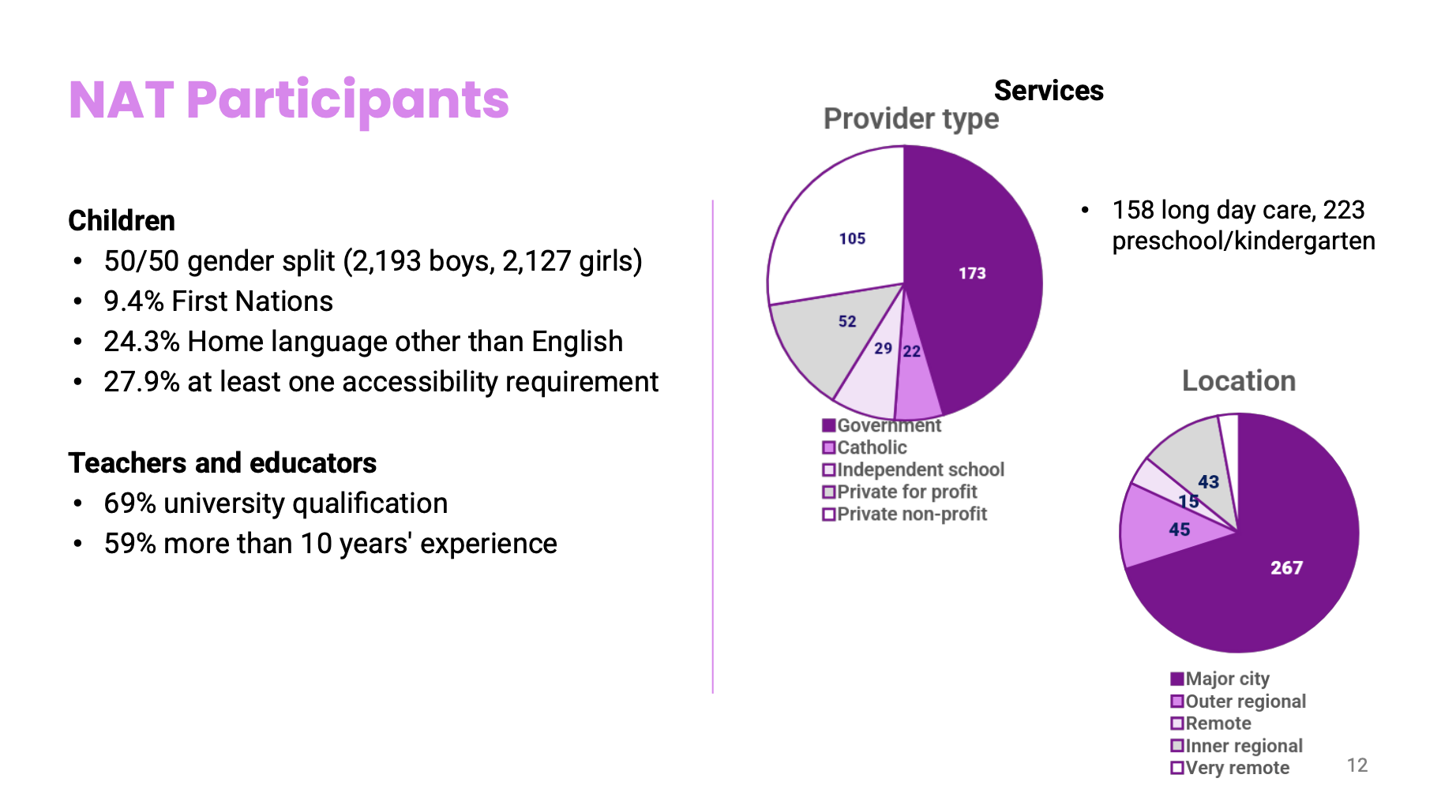
The Preschool Outcomes Measure (POM) was developed as a new national digital assessment tool to support educators in observing and understanding preschool children’s learning and development. The challenge was to design a product that translated complex educational research into an intuitive, trusted experience for educators across diverse contexts, while ensuring accessibility, ethical data use, and readiness for scale.I was primarily involved in the Small Scale Trial (SST) and the National Applied Trial (NAT), contributing to the delivery of a validated formative assessment tool aligned with learning progressions.


ACER's products serve multiple distinct audiences across its education and fintech platforms:
Educators, school administrators and Federal Government
Teachers and school leaders using ACER's assessment platforms to track student progress. Needs: clear data presentation, low-friction workflows, and interfaces that don't require training to use effectively.
Students
Assessment participants, ranging from primary through to tertiary. Needs: accessible, focused interfaces that minimise anxiety and maximise performance conditions.
Policy makers and researchers
Data-heavy users interpreting ACER research outputs. Needs: complex data made legible, with strong information hierarchy and reliable accessibility across assistive technologies.
Internal design team
A growing team of product designers who were the primary audience for the design system and research operations framework I built. Their ability to adopt and maintain what I built was the real measure of success.
I was the Lead Product Designer on the Preschool Outcomes Measure (POM) project, holding end-to-end UX and product design ownership across two major trial phases, the Small Scale Trial (SST) and the National Applied Trial (NAT). The team was small and cross-functional: I worked directly alongside a Product Manager, technical leads, developers, and subject matter experts in early childhood education research. There was no separate research lead. I owned the research programme alongside the design work.
The project ran from March to October 2025, operating in design sprints within an agile delivery model. Given the tight timeline and the complexity of the domain — two major assessment domains, ten subdomains, seven progressive competency levels — I had to move between strategic design decisions and hands-on delivery simultaneously.
What I personally owned:


1. Phase 1 - Discovery
Competitive analysis of early childhood assessment platforms including StoryPark, plus internal workshops with PM, developers, and education researchers to map the assessment framework before designing anything.
2. Phase 2 - User research
Semi-structured interviews and focus groups with educators across diverse classroom contexts. Built a Dovetail tagging taxonomy before sessions ran so findings were comparable across cohorts and usable directly in sprint planning..
3. Phase 3 - Translating complexity
Two domains, ten subdomains, seven competency levels had to become flows a busy educator could navigate without training. Designed IA around the educator's natural workflow — not the framework's structure. Validated simultaneously with educators and subject matter experts, facilitating where those two groups disagreed.
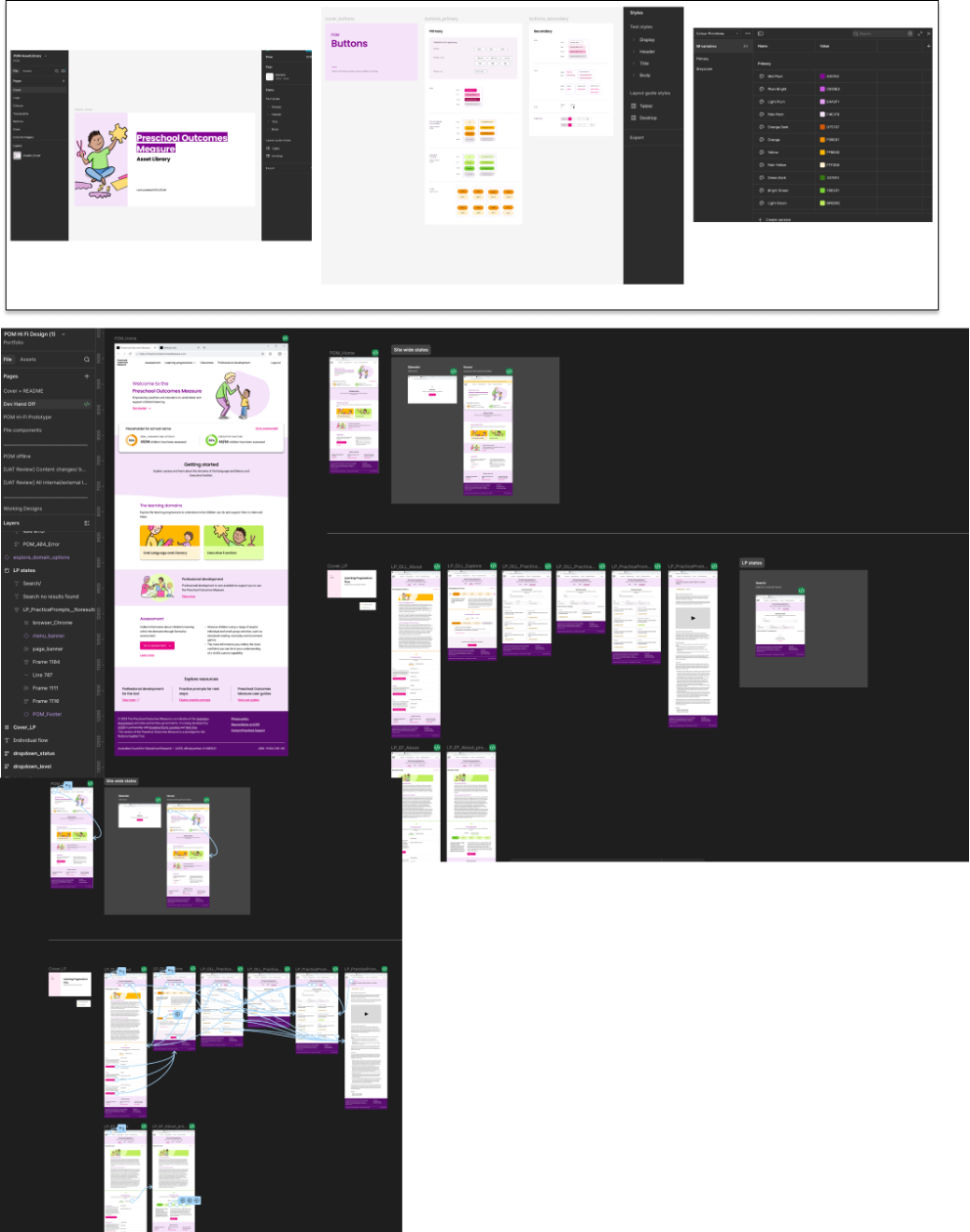
4. Phase 4 - Design system
Component library in Figma using variables, tokens, and auto-layout. WCAG compliant from component level. Architecture followed the assessment domain structure so components were reused systematically rather than rebuilt per flow.
5. Phase 5 - AI decision support
Integrated AI logic based on validated psychometric scales: real-time performance analysis, next-step recommendations, automated report generation, and intelligent data pre-filling. Designed recommendation UI in educator language, prompts that built professional confidence, not directives that replaced judgement.
6. Phase 6 - Usability testing
Two rounds. Round 1 (Small Scale Trial): task success rate, SUS scoring, behavioural observation. Round 2 (National Applied Trial): validation at scale with facilitator debrief interviews to surface gaps between self-reported ease and actual friction.
7. Phase 7 - Delivery
Weekly dev reviews, design gap meetings, UAT support, design QA on staged builds. Post-launch feedback infrastructure built into the delivery plan from day one: NAT survey, Mouseflow passive observation, and a CX feedba
Key Solutions Delivered:
Additional Enhancements:


•AI tools are most valuable when you design the workflow around them, not drop them into existing processes. The taxonomy and prompt libraries I built were as important as the tools themselves.
•Design system adoption is a change management problem, not a design problem. I had to make the new system demonstrably better for individual designers immediately, not just better for the organisation long-term, or it wouldn't be used.
•Building while delivering is hard but necessary. Waiting for a dedicated infrastructure sprint that never comes means teams carry technical design debt indefinitely. The parallel track approach worked because I made both tracks visible to leadership from day one.